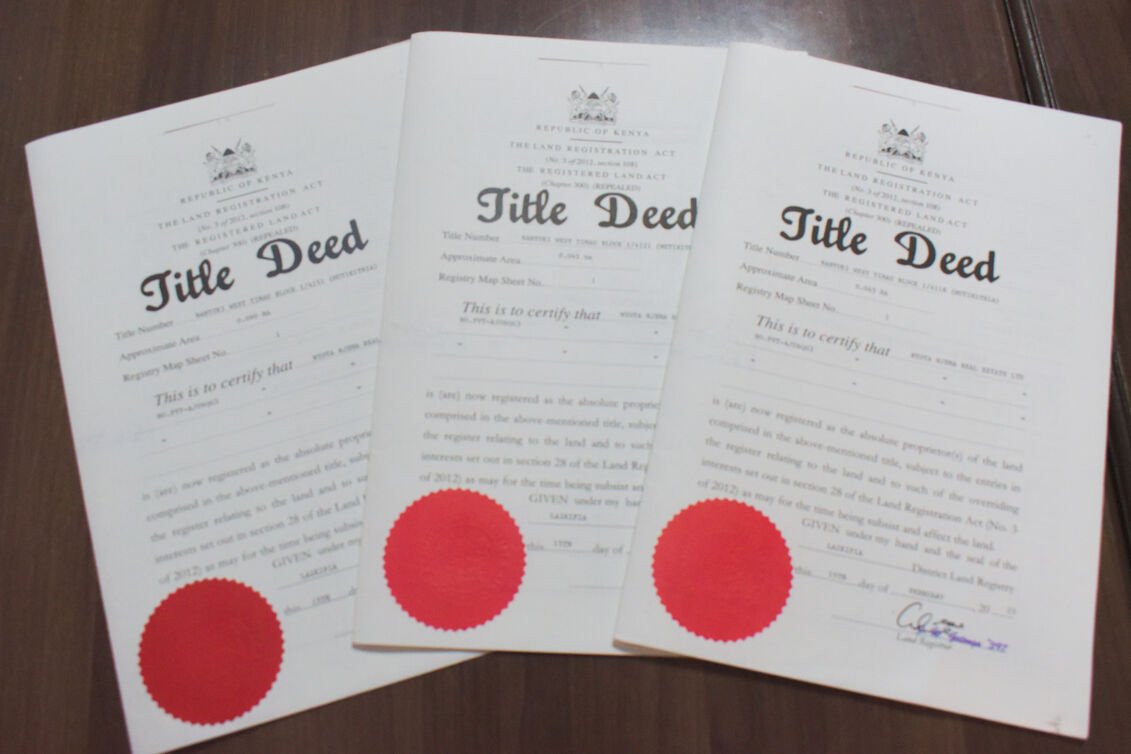
Understanding Title Deeds and Property Ownership in Kenya
Title Deeds and Property Ownership in Kenya; Everything every buyer, seller, and investor should know before buying a property in Kenya.
Buying property in Kenya is one of the most significant financial decisions you’ll make. Whether you’re a first-time buyer or an experienced investor, understanding what a title deed is, types of land ownership, and how to verify a title deed is crucial. This guide simplifies the complex legal concepts into easy-to-understand information helping you make smarter property decisions.
What is a Title Deed?
A title deed is the official legal document that proves ownership of land or property in Kenya. It shows that you have the right to use, sell, lease, or develop that land according to Kenyan law.
Think of a title deed as the ultimate ownership certificate, without it, your claim to the property isn’t fully protected.
Why Title Deeds Matter
Title deeds are essential because they:
- Prove legal ownership of property
- Protect you from fraud or illegal land claims
- Allow you to mortgage or use the land as security
- Help verify land boundaries and registered interests
One major property risk in Kenya, as seen on ArdhiSasa, is fraudulent or missing title deeds. That’s why due diligence before purchase is non-negotiable.
Types of Land Ownership in Kenya
Kenya’s land law recognizes several ownership forms. The most common are:
1. Freehold Title
- Longest form of land ownership.
- You own the land indefinitely.
- You can sell, lease, bequeath, or mortgage.
2. Leasehold Title
- You own land for a fixed number of years (often 33, 50, or 99 years).
- At expiry, rights may revert to the government or landowner unless renewed.
3. Absolute Title
- Granted after a long period of undisturbed possession.
- It’s stronger than a leasehold.
4. Sectional/Strata Title
- Used for apartments and condos.
- You own a section/unit and share ownership of common areas.
How to Verify a Title Deed in Kenya
Before you buy, you must verify the title deed. Here’s how:
- Visit the Lands Registry Office
Request a search on the title number to confirm ownership, size, encumbrances, and restrictions. - Check for Charges or Caveats
See if the property has loans, disputes, or claims against it. - Ensure Correct Owner Names
Names on the deed must match the seller’s ID/Passport. - Confirm the Property Location
Use the survey plan alongside the title to confirm exact boundaries. - Hire a Licensed Advocate or Property Expert
A lawyer can confirm legal compliance and identify red flags.
Common Questions on ArdhiSasa and Title Deeds (Answered)
What Is Ardhi Sasa?
Ardhi Sasa is Kenya’s official digital land information management platform developed by the Ministry of Lands and Physical Planning. The platform allows property owners, buyers, lawyers, and real estate professionals to access land records online, conduct title searches, track land ownership details, lodge applications, and monitor the status of land transactions. Ardhi Sasa has significantly improved transparency and reduced fraud in property transactions by enabling digital verification of title deeds and registered interests, making it a critical tool for anyone buying or selling property in Kenya.
What if the title deed is still pending?
A pending title means the land hasn’t been fully registered yet. Buying land without an issued title is riskier. Always get:
- A letter of allotment or provisional documents
- A clear timeline for when the title will be issued
- Legal assurances from the seller
Can I buy property if the title deed is in someone else’s name?
Yes, but only with proper authorization:
- If the owner is alive: use a power of attorney
- If deceased: confirm that probate or letters of administration have been issued
Always consult a lawyer before proceeding.
What does encumbrance mean on a deed?
Encumbrances are legal claims or restrictions on the land, such as:
- Mortgages
- Court orders
- Easements
- Caveats
These affect your rights — never ignore them.
How long does it take to transfer a title deed?
Transfer time varies based on:
- Whether the seller has a clear title
- Payment of all taxes and fees
- How quickly documents are processed
Typical timelines range from 4 to 12 weeks when all paperwork is complete.
What are the steps to transferring Title Deeds in Kenya?
- Sale Agreement
Buyer and seller sign a contract securing terms of sale. - Due Diligence
Confirm authenticity of documents, boundaries, and encumbrances. - Stamp Duty Payment
Buyer pays stamp duty — calculated as a percentage of market value. - Legal Transfer Forms
Your lawyer completes transfer forms and lodges with the Lands Registry. - Title Issuance
The Registrar approves and issues a new title deed in the buyer’s name.
Which are the Red Flags to Watch Out For in Title Deeds?
- Title number not yet issued
- Encumbrances not disclosed
- Seller can’t produce original ID or deed
- Survey plan doesn’t match land on the ground
- Multiple claims registered against the land
Tips for Safe Property Purchase in Kenya
- Always use a licensed lawyer
- Verify land details at the Lands Registry
- Check market value and stamp duty before purchase
- Be cautious with “too good to be true” offers
Conclusion
Understanding title deeds and property ownership in Kenya is essential for anyone buying or investing in land or houses. A valid title deed protects your investment, gives peace of mind, and ensures you legally own what you paid for.
If you are planning to buy land in Nairobi, Ruiru, Syokimau, or Kitengela, taking these steps before you sign anything can save time and prevent loss.
If you need professional assistance on any matters to do with property searches, property purchasing process or related needs, contact Azipa Real Estate team;
- Call/WhatsApp: +254 742 880 335 or +254 796 007 755
 Email: azipahomes@gmail.com
- Website: aziparealestate.co.ke
- YouTube Channel: Azipa Real Estate TV
 Email:
  Website:
  YouTube Channel: